

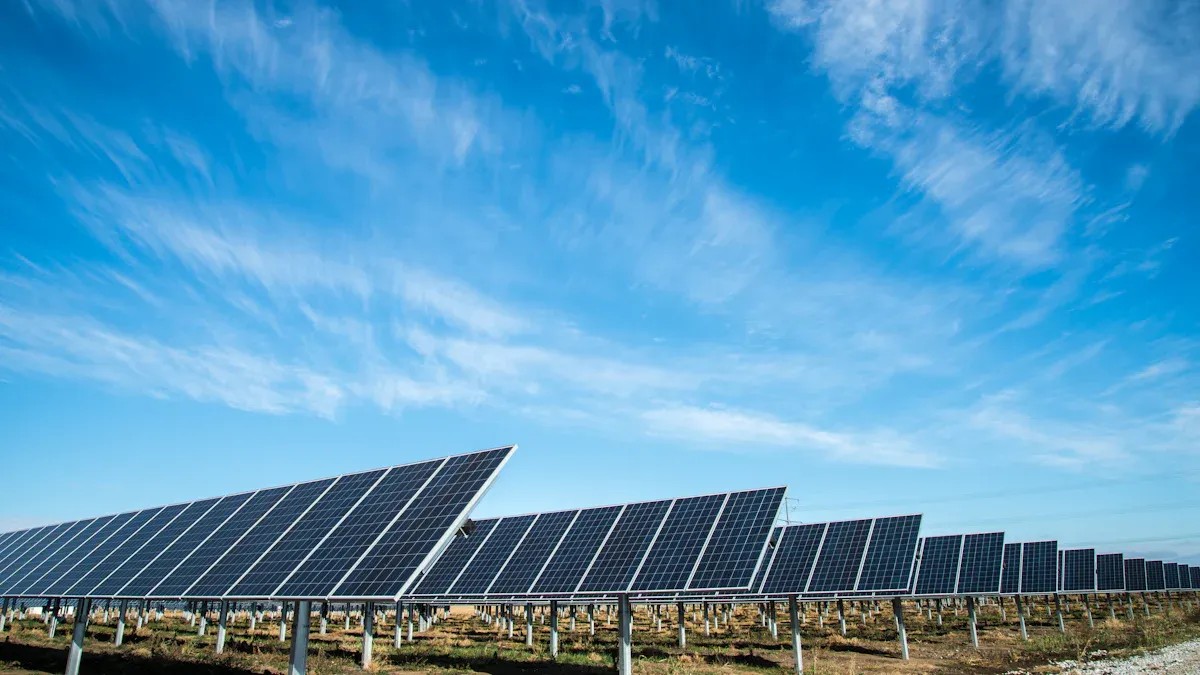
Quando me perguntam: "Os painéis solares falham em climas quentes?", posso afirmar com segurança que não. Painéis solares Anern Continuam funcionando, mesmo em calor extremo. Os designs modernos suportam altas temperaturas. Por exemplo, os painéis monocristalinos podem perder apenas 0,30% a 0,50% de eficiência por grau Celsius acima de 25°C.
Tipo de painel | Coeficiente de temperatura (por °C) |
|---|---|
silício monocristalino | -0,30% a -0,50% |
silício policristalino | -0,40% a -0,50% |
Película fina (silício amorfo) | -0,20% a -0,32% |
Heterojunção (HJT) | -0,24% a -0,30% |

Ao considerar a questão "Os painéis solares falham em climas quentes?", analiso dados do mundo real e testes de campo. Os painéis solares, incluindo os da Anern, são exemplos disso. Painel solar de 580 W Os painéis solares de meia célula, por exemplo, não falham nem mesmo em condições de calor extremo. Em vez disso, continuam a gerar energia, embora a produção possa diminuir ligeiramente. Por exemplo, a 50 °C, a maioria dos painéis ainda opera com cerca de 92% da sua potência nominal. Mesmo durante ondas de calor, observo que os painéis apresentam uma redução na eficiência, e não um desligamento total. Isso significa que os compradores comerciais podem contar com um desempenho consistente, mesmo em climas adversos.
Como explica o Professor Alastair Buckley, da Universidade de Sheffield: "Na verdade, não é um grande problema. As altas temperaturas afetam apenas marginalmente a produção total de energia solar – é um efeito secundário. Se estiver ensolarado e quente, você terá uma boa produção de energia. Ela não cai drasticamente."
Frequentemente me perguntam: "Os painéis solares falham em climas quentes?" A resposta é não, mas é importante entender a perda de eficiência. O principal fator é o coeficiente de temperatura. Para a maioria dos painéis comerciais, incluindo os da Anern... painel solar cortado ao meioO coeficiente de temperatura varia de -0,3% a -0,5% por grau Celsius acima de 25°C. Isso significa que, para cada grau acima de 25°C, a produção do painel diminui nessa porcentagem. Por exemplo, se a temperatura subir de 25°C para 60°C, um painel com um coeficiente de -0,35%/°C perderá cerca de 12,25% de sua produção.
A perda de eficiência por aumento de grau Celsius situa-se normalmente entre 0,3% e 0,5%.
Diferentes tecnologias, como PERC, TOPCon, IBC e HJT, apresentam perdas variáveis em altas temperaturas.
Em dias quentes, pode ocorrer uma redução de 10 a 15% na potência de saída devido às temperaturas elevadas.
Observo que os módulos de silício cristalino podem produzir de 15% a 20% mais eletricidade em condições mais frias em comparação com o clima quente. No entanto, a queda na produção não significa falha. Em vez disso, reflete uma redução previsível e controlável.
Segue abaixo uma tabela geral de parâmetros para compradores comerciais, comparando os principais modelos da Anern:
Modelo | Potência nominal | Tipo de célula | Coeficiente de temperatura | Faixa de temperatura de operação | Principais características |
|---|---|---|---|---|---|
Painel solar de 580 W | 580W | Bifacial tipo N | -0,30%/°C | -45°C a +85°C | Alta eficiência, bifacial, vidro duplo |
Painel solar de meia célula | 550W | Meio corte tipo P | -0,35%/°C | -45°C a +85°C | Perda de sombreamento reduzida, grade densa |
Painel solar cortado ao meio | 540W | Mono Meio Corte | -0,35%/°C | -45°C a +85°C | Maior durabilidade, anti-PID |
Esta tabela ajuda atacadistas e revendedores a comparar opções para projetos de grande escala.
Sempre verifico a faixa de operação antes de recomendar um painel solar para uso comercial. Os painéis solares da Anern, incluindo o painel solar de 580 W e o painel solar cortado ao meio, são certificados para operar de -45 °C a +85 °C. Isso atende ou supera os padrões da indústria. Sei que os painéis da Anern utilizam materiais avançados, como vidro de alta durabilidade e revestimentos antirreflexo, para controlar a absorção de calor e resistir à abrasão.
Recurso | Descrição |
|---|---|
Tecnologia de painéis | Os painéis das séries N e Mono Half Cut lidam com o calor de forma eficaz. |
Coeficiente de temperatura | Com uma taxa de variação de até -0,30%/°C para a Série N, isso garante uma melhor retenção de potência em condições de calor. |
Material | Silício monocristalino para melhor desempenho em altas temperaturas. |
Recursos anti-PID | Proteção contra a degradação induzida pelo calor para confiabilidade a longo prazo. |
Características de design | Vidro de alta durabilidade e revestimentos antirreflexo para melhor gerenciamento térmico. |
Os fabricantes testam esses painéis usando métodos como ciclos térmicos, calor úmido e o Teste Duplo 85 (85°C e 85% de umidade por 1000 horas). Esses testes garantem que os painéis Anern suportem as condições mais extremas sem falhar.
A associação comercial Solar Energy UK confirma que, em geral, espera-se que os painéis solares funcionem em temperaturas entre -40°C e +85°C. O desempenho cai de 0,2% a 0,5% para cada grau acima de 25°C, mas o calor intenso geralmente coincide com maior incidência de luz solar e dias mais longos.
Observei que os termos de garantia dos painéis Anern cobrem a degradação natural, incluindo os efeitos de altas temperaturas, a degradação induzida por potencial (PID) e os ciclos térmicos. Isso proporciona tranquilidade aos compradores comerciais ao investirem em projetos solares de grande escala.
Então, os painéis solares falham em climas quentes? Minha experiência e os dados indicam que não. Os painéis comerciais da Anern, como o painel solar de 580 W, o painel solar de meia célula e o painel solar cortado ao meio, oferecem desempenho e durabilidade confiáveis, mesmo nos climas mais quentes.
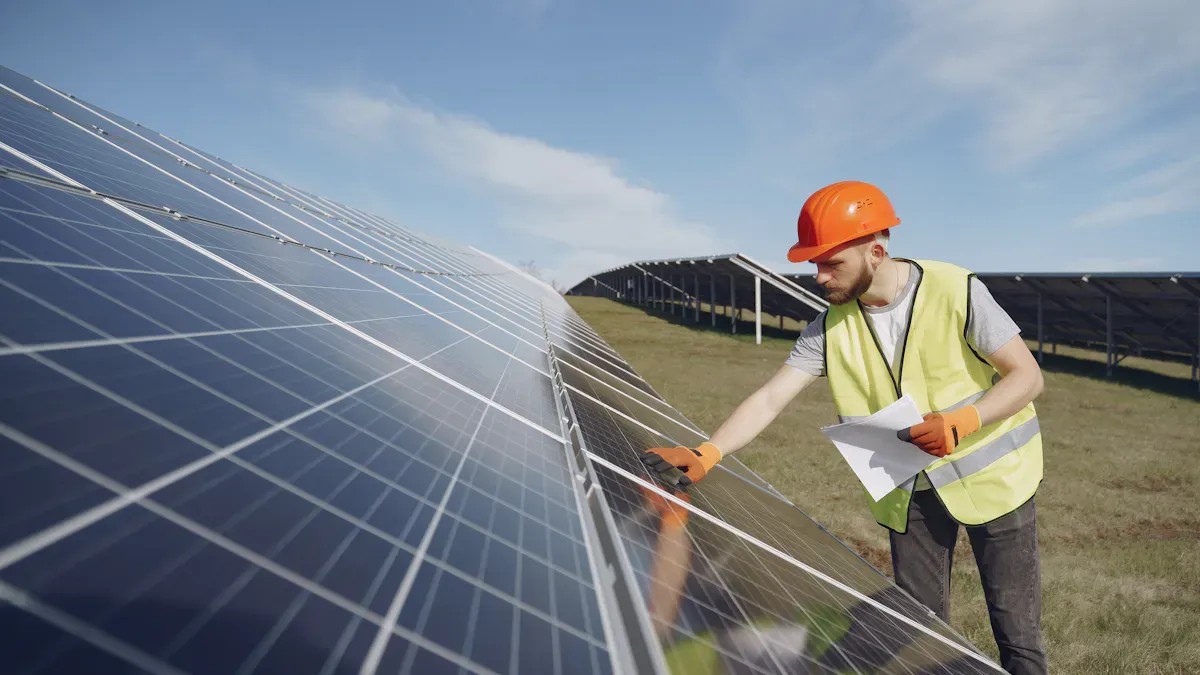
Vi painéis solares da Anern funcionando de forma confiável em algumas das regiões mais quentes, incluindo Uganda e Zimbábue. Esses projetos levaram eletricidade a comunidades que antes tinham acesso limitado. O sucesso a longo prazo dessas instalações depende da qualidade da engenharia e de um projeto adequado. Percebi que os sistemas instalados no solo geralmente se mantêm mais frios do que os instalados em telhados, o que ajuda a manter a eficiência. Os instaladores nessas regiões prestam muita atenção ao dimensionamento do sistema, ao armazenamento de baterias e à manutenção regular para garantir a geração consistente de energia.
Em climas quentes, os painéis solares podem atingir temperaturas de 130 a 160 °F (54 a 71 °C).
Painéis instalados no solo geralmente operam em temperaturas mais baixas, aumentando a eficiência.
Entender como o calor afeta os painéis me ajuda a planejar instalações melhores.
Ao comparar diferentes tipos de painéis, percebo que a tolerância ao calor varia. Aqui está uma breve análise do desempenho das tecnologias mais comuns:
Tipo de painel | Coeficiente de temperatura (°C) | Perda de eficiência (%) a 87°F |
|---|---|---|
Monocristalino | -0,3% a -0,5% | 3% a 5% |
Policristalino | -0,3% a -0,5% | 3% a 5% |
Bifacial | -0,34% | N / D |
Vidro duplo | N / D | N / D |
Painéis bifaciais, como o painel solar de 580 W da Anern, captam a luz solar de ambos os lados, o que aumenta a produção total de energia. Também recomendo o painel solar bifacial e o painel solar bicortado devido ao seu excelente desempenho em altas temperaturas.
Para responder à pergunta "Os painéis solares falham em climas quentes?", foco em soluções práticas. Sempre sugiro os seguintes passos para projetos comerciais:
Escolha painéis com baixos coeficientes de temperatura, como o painel solar de 580 W.
Instale os painéis com um espaço entre eles e o teto ou utilize suportes inclinados para melhorar a circulação de ar.
Limpe os painéis regularmente para remover poeira e detritos.
Agende inspeções trimestrais, especialmente em regiões empoeiradas ou quentes.
Controle a vegetação para evitar sombreamento e superaquecimento.
Dica: Instalar os painéis de 10 a 20 centímetros acima do telhado pode reduzir a temperatura em até 10°C, o que pode aumentar a produção em 2 a 5%.
Seguindo essas estratégias, ajudo meus clientes a obter o melhor desempenho de seus investimentos em energia solar, mesmo em condições de calor extremo.
Verifiquei que os painéis solares Anern, incluindo o painel solar de 580 W, o painel solar de meia célula e o painel solar cortado ao meio, não apresentam falhas em climas quentes.
A eficiência pode diminuir entre 0,3% e 0,5% por grau Celsius acima de 25°C.
A maioria dos sistemas proporciona anos de economia antes de qualquer perda significativa.
Melhores práticas | Descrição |
|---|---|
Maximizar a eficiência | Utilize espaçamento adequado e métodos de resfriamento para obter melhor desempenho. |
Correspondência tecnológica | Escolha o tipo de painel adequado ao seu clima. |
Eu sempre recomendo escolher painéis duráveis e seguir as orientações de especialistas para um desempenho confiável em calor extremo.
Observo que os painéis solares de 580 W, de meia célula e de meia célula da Anern mantêm uma produção robusta mesmo em altas temperaturas. Seu design garante um desempenho confiável para projetos de grande escala.
Não observei redução na vida útil dos painéis Anern. Os materiais avançados e os recursos anti-PID protegem o painel solar de 580 W e o painel solar de meia célula contra danos relacionados ao calor.
Recomendo o uso de painéis solares de 580 W ou painéis solares cortados ao meio, com montagem adequada para permitir a circulação de ar. A limpeza regular e as inspeções programadas ajudam a manter o desempenho máximo em sistemas comerciais.

Adicionar :5th Floor, Building B, No.2817 Kaichuang Avenue, Science Zone, Huangpu District, Guangzhou, China


Anern Industry Group Limited Todos os direitos reservados
.Xml | política de Privacidade  REDE SUPORTADA
 Linguagem


