

Why Can Inverters Not Store Energy Without External Solar Battery Packs?
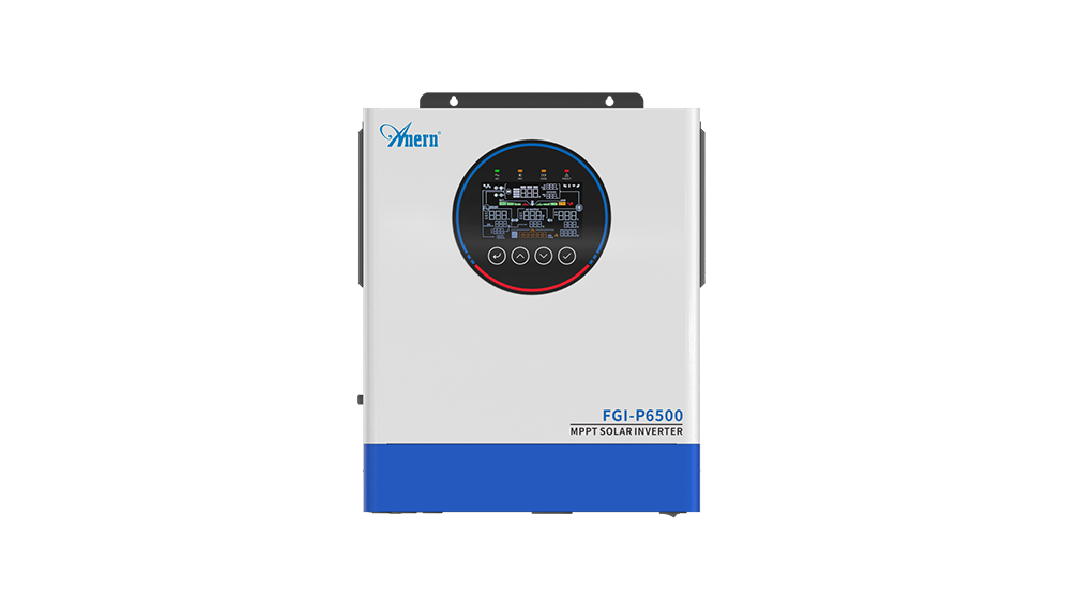
Inverters cannot store energy because they only convert electricity from solar panels into usable power for your home. You need external Solar-Battery packs for energy storage. This setup lets you harness solar energy and keep your home powered when sunlight is unavailable. Modern solar-battery packs offer several advantages:
Achieve independence from the grid by storing energy on-site.
Use stored energy during peak demand times.
Remain powered during outages, ensuring reliable backup for your home.
Energy storage with solar batteries increases your energy independence and provides consistent solar energy for your home.
Inverters convert solar energy into usable power but cannot store energy. You need external solar-battery packs for energy storage.
Solar batteries provide energy independence, allowing you to use stored energy during outages and peak demand times.
Integrating solar batteries with inverters enhances energy management, reduces electricity costs, and supports sustainability goals.
Choosing the right solar-battery system improves reliability and ensures continuous power supply during unexpected outages.
Investing in advanced battery technology maximizes energy efficiency and helps meet evolving energy demands.
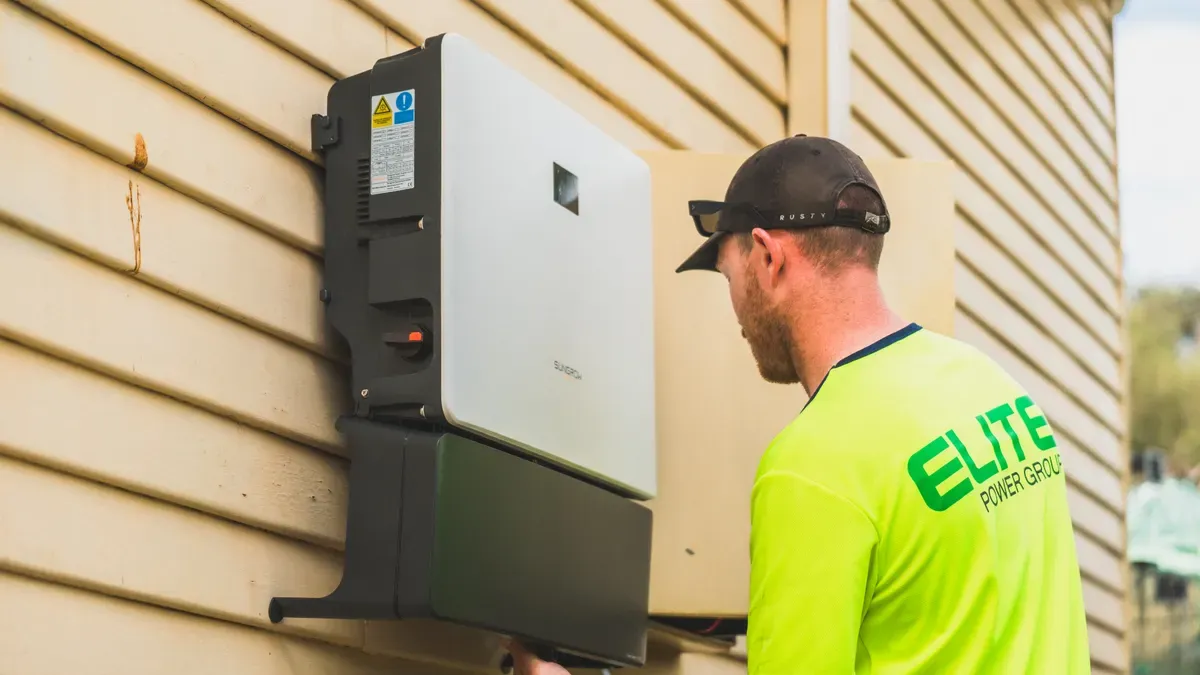
You rely on inverters as a critical component in any solar installation for your business or commercial project. Inverters perform a vital function by converting direct current (DC) electricity from solar panels into alternating current (AC) electricity. This AC power is necessary for running equipment, lighting, and appliances in a home or commercial facility.
Inverters enable the integration of solar energy into the electrical grid.
They ensure that the electricity generated by solar panels becomes usable for daily operations.
Inverters support the seamless flow of solar power to your home or business, maximizing the value of your solar investment.
Tip: Always select an inverter that matches the scale and requirements of your solar installation to ensure optimal performance.
You may wonder why inverters cannot store energy for later use. The answer lies in their design and technical limitations. Inverters only convert electricity; they do not have built-in storage capabilities. Traditional grid-tied inverters require a grid connection to operate. During power outages, these inverters cannot use available solar energy, leaving the generated power unused. The UL1741 standard requires grid-tied inverters to disconnect during outages, which further prevents energy storage.
Hybrid inverters can work with solar-battery packs to store excess solar energy, but they are not designed for wind or hydro applications. Even with hybrid inverters, you still need dedicated solar-battery products to achieve true energy storage. Inverter batteries themselves do not provide storage functions; they act as a bridge between the solar panels and the battery packs.
For wholesalers and resellers, offering a complete solution that includes both inverters and solar-battery packs ensures your clients can maximize energy independence and reliability for their home or commercial projects.
You depend on inverters to transform the electricity produced by solar panels into a form suitable for commercial operations. The conversion process follows these steps:
Solar panels generate direct current (DC) power. Photovoltaic cells respond to sunlight and create a steady flow of DC electricity.
The inverter uses electronic switches to convert DC into alternating current (AC). These switches operate rapidly, shaping the DC signal into a sine wave pattern that matches the requirements of commercial electrical systems.
The converted AC power is filtered and delivered to the main electrical panel. This power becomes available for use in equipment, lighting, and appliances or can feed back into the grid.
Note: Proper inverter selection ensures efficient energy conversion and maximizes the value of your solar investment.
You require solar batteries to capture and store excess energy generated during peak sunlight hours. Without storage, surplus energy flows back to the grid, reducing the potential for energy independence. Solar batteries enable you to retain this energy and deploy it when demand increases or sunlight is unavailable. By integrating battery storage, you gain control over how and when your solar energy is used. This approach lowers electricity costs and supports a reduced carbon footprint for your commercial facility.
Solar batteries play a critical role in managing energy supply for wholesalers and resellers. They allow you to offer clients reliable backup power and flexible energy management solutions. When solar panels produce more energy than needed, battery systems store the surplus, ensuring continuous power availability. This capability enhances operational reliability and supports long-term sustainability goals.
Tip: Investing in advanced battery storage solutions positions your business to meet evolving energy demands and regulatory requirements.
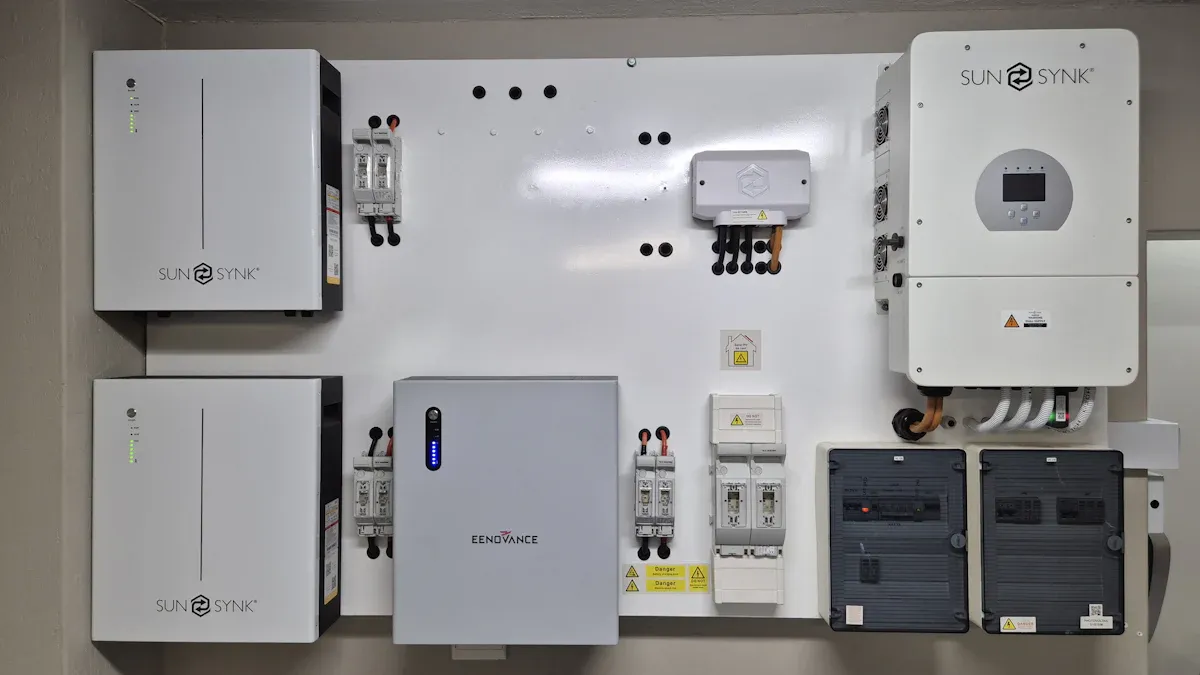
You depend on a reliable system to maintain operations during unexpected outages. Battery packs and inverters form the backbone of home backup solutions for commercial and wholesale applications. Solar panels generate electricity throughout the day. The inverter directs this energy to your facility and charges the battery storage system, such as the 96-1000V High Voltage UPS Lithium Battery. When the grid fails, the inverter isolates your site and draws stored energy from the battery pack. This process ensures uninterrupted power supply for critical equipment and lighting.
Hybrid inverters play a crucial role in this setup. They convert DC power from solar panels into AC power for immediate use. They also convert AC power from the grid into DC power for battery storage. During a grid outage, hybrid inverters seamlessly switch to battery power, providing home backup without manual intervention. You benefit from continuous energy flow, even when external power sources are unavailable.
Note: Solar panels can recharge battery packs while powering essential loads, maximizing uptime and operational efficiency.
You need an efficient strategy to manage stored energy in your home energy storage system. The process involves several steps:
Use solar energy in real time. Power your facility directly during peak sunlight hours, reducing reliance on the grid.
Store excess energy in battery storage. Save surplus electricity produced during the day for use in the evening or during periods of high utility rates.
Follow a typical daily cycle. In the morning, solar panels supply power first. By midday, excess energy charges the battery pack. In the evening, the battery powers your facility, minimizing expensive grid consumption.
You can optimize energy usage and achieve cost savings by integrating battery packs with inverters. Hybrid inverters improve energy efficiency by storing surplus energy, reducing waste, and lowering electricity costs. Solar-battery packs store excess energy generated by solar panels, allowing you to use it during peak demand times. This approach enhances home energy storage and supports long-term sustainability goals.
Tip: Choose battery storage solutions with advanced battery management systems for accurate charge detection and status monitoring.
You have several configuration options for integrating battery packs with inverters:
Hybrid inverters: Commonly used in commercial and wholesale setups to integrate battery packs, enabling energy storage and backup power.
AC-coupled hybrid inverters: Suitable for adding battery backup to existing systems, using alternating current energy.
DC-coupled hybrid inverters: Ideal for new installations, connecting directly to the DC side of solar panels and batteries for greater efficiency.
You achieve greater energy independence and operational reliability by leveraging these configurations. The interaction between inverters and solar-battery packs in a typical home energy storage setup allows you to manage energy supply, provide home backup, and optimize performance for commercial applications.
When you offer solar batteries for home installations, you provide your clients with a range of valuable advantages. These benefits make solar-battery solutions a compelling addition to any solar energy system:
Energy independence: Homeowners can store surplus solar energy, reducing reliance on utility companies and ensuring power during outages.
Improved home value: Properties equipped with solar batteries for home use often see increased market appeal due to long-term savings and environmental responsibility.
Reliable power supply: Solar-battery systems deliver backup power for essential appliances, maintaining comfort and safety during grid failures.
Easy maintenance: Compared to traditional backup systems, solar batteries for home require minimal upkeep, allowing users to enjoy consistent performance.
Versatility and flexibility: Homeowners can customize energy usage, drawing from stored energy for various needs and schedules.
Safety and security: Advanced safety features in solar-battery packs provide peace of mind for your clients.
Tax credits and incentives can further reduce the cost of installing solar batteries for home, while time-of-use pricing allows users to maximize savings by storing energy when rates are low and using it during peak periods.
You also help your clients achieve environmental goals. Solar-battery systems do not emit harmful pollutants, produce lower greenhouse gas emissions, and contribute to water conservation. By integrating solar batteries for home, you support a cleaner, quieter, and more sustainable energy future.
You want to deliver energy solutions that guarantee reliability for your clients. Solar-battery packs play a critical role in maintaining continuous power supply, especially during outages. Here is how solar batteries for home enhance system reliability:
Battery storage maintains power during outages, allowing homes to operate for days without interruption.
Solar-battery systems store excess energy for use when solar panels are not producing, such as at night or during cloudy weather.
Homes equipped with solar batteries for home can disconnect from the grid temporarily, ensuring essential appliances keep running.
|
Feature |
Description |
|---|---|
|
Energy Storage |
Solar-battery backup systems store energy for later use, reducing grid reliance. |
|
Continuous Power |
Homes continue using solar energy during outages, ensuring reliable backup. |
|
Instant Power Supply |
Batteries provide immediate power when the grid fails, minimizing disruption. |
Solar batteries for home require minimal ongoing expenses and maintenance, with most systems needing only software updates and occasional checks. This reliability and low maintenance make solar-battery solutions an attractive choice for your commercial clients and their customers.
When you evaluate the best batteries for residential energy storage, you should focus on features that drive performance and long-term value. The following table highlights the most important criteria for top solar batteries:
|
Feature |
Description |
|---|---|
|
Usable capacity (kWh) |
The actual energy you can draw from the battery, indicating how much energy is available for use. |
|
Continuous power output (kW) |
The amount of electricity the battery can deliver at any moment, crucial for high-draw appliances. |
|
Round-trip efficiency |
The percentage of stored energy that is retrievable, showing how much energy is lost during use. |
|
Warranty terms |
Important to check the throughput guarantee and end-of-life capacity retention percentage. |
|
Battery chemistry |
Lithium iron phosphate (LFP) is preferred for its stability and safety compared to older chemistries. |
You should prioritize batteries with advanced LiFePO4 technology. This chemistry offers a cycle life of up to 10,000 cycles and a very low risk of thermal runaway, ensuring safety and reliability. Modular design allows you to scale systems for commercial clients, adapting to changing energy needs. Safety certifications such as UL, CE, and IEC are essential for compliance in major markets. High round-trip efficiency ensures you maximize stored energy and minimize losses.
Tip: Evaluate batteries based on local electricity rates, time-of-use pricing, and net metering policies to optimize cost savings for your clients.
You have access to a range of best batteries for commercial and wholesale projects. The following table summarizes leading models and their key specifications:
|
Model |
Usable Capacity |
Continuous Power |
Warranty |
Round-trip Efficiency |
|---|---|---|---|---|
|
Anern Solar Battery |
Customizable |
High |
8+ years |
Up to 95% |
|
Tesla Powerwall 3 |
13.5 kWh |
11.5 kW |
Up to 10 years |
90% |
|
FranklinWH aPower 2 |
15 kWh |
10 kW |
Up to 15 years |
89% |
|
Enphase IQ Battery |
10 kWh |
3.84 kW |
15 years |
96% |
|
SolarEdge Home Battery |
9.7 kWh |
5 kW |
10 years |
94.5% |
|
Fortress Power |
18.5 kWh |
12 kW |
10 years |
98% |
|
Sigenergy Sigenstor BAT |
10–30 kWh |
5–15 kW |
10 years |
95% |
|
MidNite Solar Powerflo |
16 kWh |
8 kW |
10 years |
93% |
|
Rack LiFePO4 Lithium Battery |
Scalable |
High |
8+ years |
Up to 95% |
You can see that the best batteries, such as the Anern Solar Battery and Rack LiFePO4 Lithium Battery, offer modularity, high efficiency, and robust safety features. These batteries support flexible installation and seamless integration with hybrid inverters, making them ideal for large-scale commercial and wholesale applications.
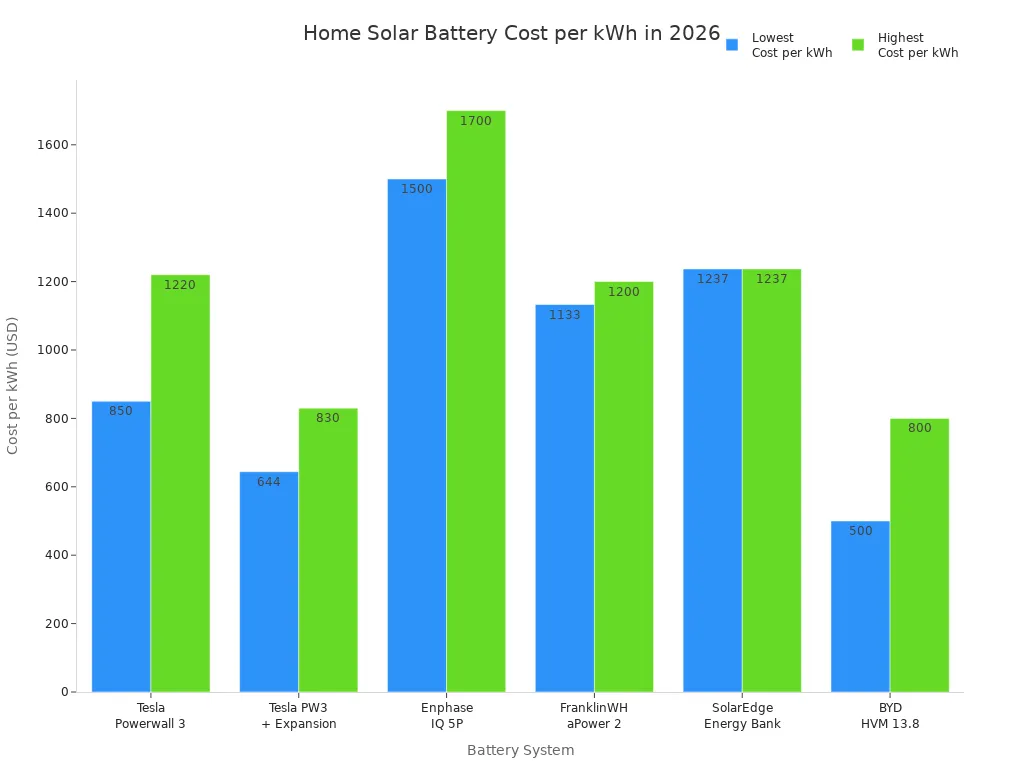
When you select top battery brands, consider warranty support, cycle life, and compatibility with virtual power plant programs. You should always match battery capacity to your clients’ energy consumption patterns and local utility rates. This approach ensures you deliver the best batteries for every commercial project.
You rely on inverters to convert solar energy, but only solar-battery packs provide true energy storage for commercial and wholesale applications. Selecting advanced lithium-ion batteries enhances your energy management strategy. Solar-battery packs deliver key advantages:
Lower greenhouse gas emissions and support sustainability goals.
Enable charging of electric vehicles with cleaner energy.
Reduce reliance on the grid, promoting energy independence.
Improve energy efficiency by storing excess solar power for later use.
Achieve significant reductions in energy bills over time.
You strengthen your business by investing in reliable solar-battery packs. This approach supports operational continuity, energy security, and long-term sustainability.
You gain flexibility with energy storage. You can store excess solar power for later use, which helps you manage demand and reduce reliance on the grid. This approach improves operational efficiency and supports your clients’ sustainability goals.
You should consider battery capacity, technology, installation, and maintenance when evaluating cost. Larger storage systems often have a higher initial cost but deliver greater long-term value. You can optimize cost by selecting scalable solutions that match your clients’ needs.
You analyze the cost of installation, ongoing maintenance, and potential savings from reduced grid usage. You also factor in incentives and the ability to avoid peak demand charges. This calculation helps you determine the best price-to-performance ratio for your clients.
You can add storage to most commercial solar systems. Hybrid inverters and modular battery packs allow seamless integration. This upgrade enhances backup capabilities and helps you control energy cost. You improve system resilience and offer more value to your customers.
You should evaluate usable capacity, cycle life, safety certifications, and compatibility with existing infrastructure. You also need to consider cost, price stability, and after-sales support. These factors ensure you deliver reliable storage options that meet your clients’ expectations.

Adicionar :5th Floor, Building B, No.2817 Kaichuang Avenue, Science Zone, Huangpu District, Guangzhou, China


Anern Industry Group Limited Todos os direitos reservados
.Xml | política de Privacidade  REDE SUPORTADA
 Linguagem


